Agricultural properties come in all shapes and sizes, and so do their energy needs. Whether you operate a small family holding or a large commercial enterprise, our engineers will design a system that aligns precisely with your buildings, land, budget, and long-term goals.

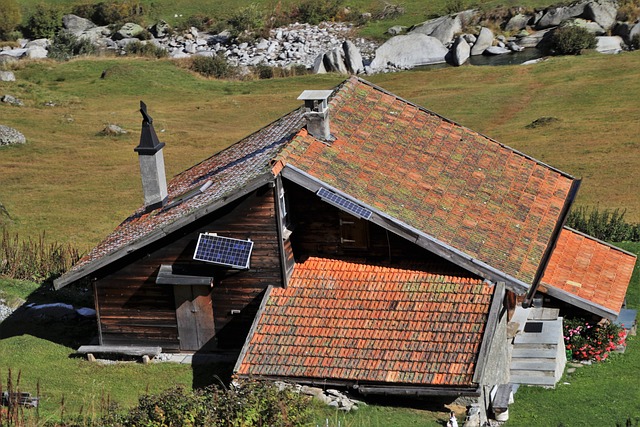
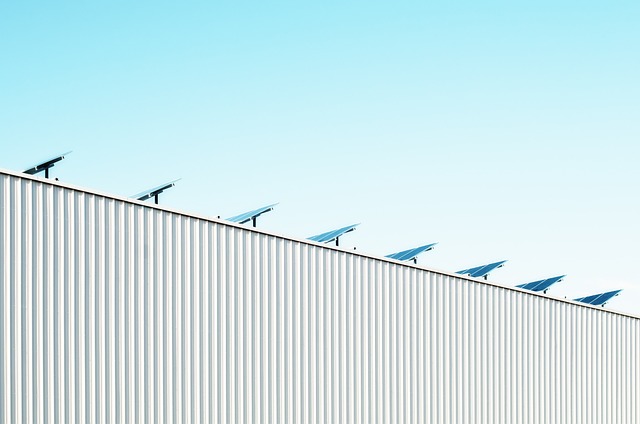
Roof-mounted installations are the most straightforward and cost-effective way to bring solar energy to your farm. Agricultural buildings typically offer large, unshaded roof areas that are perfectly suited for solar panels. Barns, grain stores, milking parlours, equipment sheds, and poultry houses all provide excellent mounting surfaces with favourable south-facing orientations.
Our engineers carry out a full structural assessment of your roof before designing the system, ensuring the building can support the additional load safely. We work with every common agricultural roof type including corrugated steel, standing seam metal, fibre cement, and slate. Installation is non-invasive, and most roof-mounted farm projects are completed within 2 to 4 working days, with minimal disruption to daily farming activities.
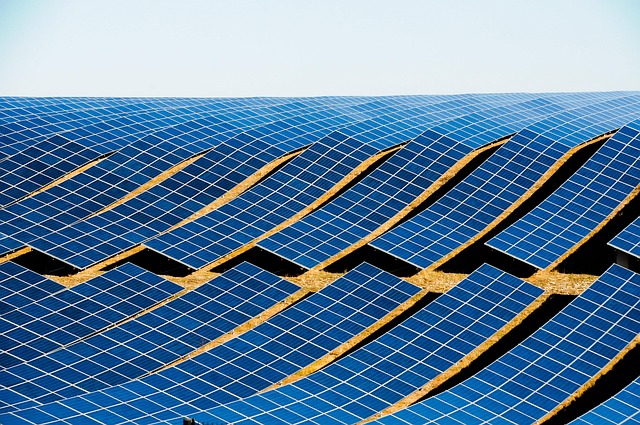
When roof space is limited or unsuitable, ground-mounted solar arrays offer a powerful alternative. These systems are installed on dedicated frames driven directly into the ground, typically on marginal or lower-grade agricultural land where crop yields are already minimal. Ground arrays offer the advantage of optimal angle and orientation, since they are not constrained by existing building geometry.
Our driven pile foundations require no concrete and cause minimal soil disturbance, meaning the land can be fully restored if the system is ever decommissioned. For farms with available acreage, ground-mounted arrays can scale from 50kW domestic-scale projects right up to multi-megawatt installations that generate significant revenue through grid export. Each array is custom-designed with row spacing optimised for the specific latitude and terrain of your site to maximise annual energy yield.

Battery storage transforms your solar installation from a daytime-only energy source into a round-the-clock power supply. Without storage, any solar electricity generated during peak daylight hours that exceeds your immediate demand is exported to the grid at relatively low tariff rates. With batteries, that surplus energy is captured and stored for use during evenings, early mornings, or cloudy periods when your panels are producing less.
We install lithium iron phosphate (LiFePO4) battery systems ranging from compact 5kWh units for small farm offices to large 200kWh+ commercial banks for high-demand operations. These batteries are selected specifically for agricultural environments because of their superior thermal stability, long cycle life exceeding 6,000 full charge-discharge cycles, and resistance to temperature extremes. Our intelligent energy management system decides in real time whether to store, consume, or export energy based on your usage patterns, grid tariff rates, and weather forecasts.
Agrivoltaics represents the most innovative approach to farm-based solar energy. These elevated ground-mount systems position solar panels at a height of 2.5 metres or more above the ground, allowing livestock to graze freely beneath them or shade-tolerant crops to grow underneath. The result is dual-use land that generates clean electricity while maintaining its agricultural function.
Sheep farmers across the UK have embraced agrivoltaics enthusiastically, finding that their flocks actively seek out the shade provided by panels during warm months. This natural shelter reduces heat stress, improves animal welfare, and can lead to better weight gain during summer. The sheep in turn keep grass growth managed around the panel structures, reducing the need for mechanical mowing and maintenance. For arable farms, certain crops including lettuce, spinach, herbs, and berries can actually benefit from the dappled light created by overhead panels, leading to reduced water requirements and extended growing seasons.

As electric vehicles become more common in rural areas, farms are uniquely positioned to benefit. Many agricultural businesses already operate electric utility vehicles, quad bikes, and are beginning to transition pickup trucks and vans to electric models. Solar-powered EV charging stations allow you to fuel your farm fleet using your own clean energy at effectively zero cost per mile.
Beyond powering your own vehicles, farm-based EV charging can create an additional revenue stream. Farms located near popular walking routes, holiday accommodation, or on well-travelled rural roads can offer public charging facilities. With the right configuration, a single 22kW charging point connected to your solar system can generate meaningful supplementary income while providing a valued community service. We install both 7kW slow chargers ideal for overnight fleet charging and 22kW fast chargers suitable for visitor-facing locations, all integrated seamlessly with your solar and battery system.
Every VDTPanl installation comes equipped with our comprehensive monitoring platform that gives you full visibility into your energy system's performance. The dashboard tracks real-time generation from your panels, energy consumption across your farm, battery charge levels, grid export volumes, and cumulative financial savings. You can access this information from any device through a web browser or our dedicated mobile application.
Beyond simple monitoring, the platform includes intelligent energy management features. The system learns your farm's usage patterns over time and automatically adjusts battery charging schedules, load distribution, and export timing to maximise your financial returns. If any component underperforms, such as a panel producing less than expected due to soiling or a wiring fault, the system generates an automatic alert sent to both you and our maintenance team. This proactive approach means issues are identified and resolved before they impact your energy savings, often before you even notice a problem.
Each solution serves different needs and can be combined for a comprehensive energy strategy. Here is a quick overview to help you understand which options suit your farm best.
| Solution | System Size | Typical ROI | Best For | Planning Needed |
|---|---|---|---|---|
| Roof-Mounted | 10kW – 250kW | 3–5 years | Farms with large barn roofs | Usually not required |
| Ground-Mounted | 50kW – 5MW+ | 4–7 years | Farms with spare land | Depends on size/location |
| Battery Storage | 5kWh – 200kWh+ | 5–8 years | Maximising self-consumption | Usually not required |
| Agrivoltaics | 100kW – 2MW+ | 5–8 years | Livestock & mixed farms | Usually required |
| EV Charging | 7kW – 22kW per unit | 3–5 years | Fleet & visitor charging | Usually not required |
| Monitoring | Included with all | Immediate | All installations | Not required |
We use only Tier 1 components from established manufacturers. Here are the detailed specifications behind every system we install.
Every panel we install is manufactured by a Bloomberg Tier 1 rated producer, ensuring bankable quality and long-term reliability. Our standard modules use N-type monocrystalline cell technology, which delivers superior low-light performance compared to older P-type panels. This matters significantly in the UK climate where overcast conditions are frequent.
Key specifications include: IP68 water and dust ingress protection, IEC 61701 salt mist corrosion certification for coastal farms, IEC 62716 ammonia resistance certification for livestock operations, and PID (Potential Induced Degradation) resistance. Each panel undergoes electroluminescence testing before leaving the factory, guaranteeing zero micro-cracks or cell defects at the point of installation.
Performance degradation is warranted at less than 0.4% per year, meaning after 25 years your panels will still produce over 90% of their original rated output. The product warranty covers manufacturing defects for 12 years, while the performance warranty extends to a full 25 years.
For systems up to 100kW, we typically specify SMA Sunny Tripower or Huawei SUN2000 string inverters, both of which offer conversion efficiencies above 98.5%. These inverters feature multiple Maximum Power Point Tracking (MPPT) inputs, allowing different roof faces or panel strings to be optimised independently even when they experience different shading or orientation conditions.
For larger commercial installations exceeding 100kW, we deploy Huawei SUN2000 commercial series inverters with built-in PID recovery functionality and integrated Arc Fault Circuit Interrupter (AFCI) safety features. All inverters include wireless connectivity for remote monitoring through our cloud platform.
Hybrid inverters are available for systems that include battery storage, allowing a single unit to manage solar generation, battery charging/discharging, and grid interaction. Standard manufacturer warranty is 10 years, extendable to 15 or 20 years upon request.
Our mounting systems are manufactured from either marine-grade anodised aluminium (6005A-T5 alloy) or hot-dip galvanised steel, both selected for their outstanding corrosion resistance in the humid and chemically exposed environments found on farms. For corrugated metal roofs, we use standing seam clamps that grip the roof profile without drilling any penetrations, maintaining the roof's waterproof integrity.
For fibre cement, slate, and tile roofs, roof hooks with EPDM rubber gaskets provide secure, weatherproof attachment points. Every installation includes a site-specific structural engineering calculation covering dead load, wind uplift, and snow loading according to BS EN 1991 and local building regulations.
Ground-mount racking uses driven galvanised steel piles installed by a hydraulic piling machine. This foundation method requires no concrete, preserves the soil structure beneath, and allows complete removal and land restoration at the end of the system's working life. Standard ground-mount configurations support single-axis tracking options for sites where maximising yield justifies the additional investment.
All DC cabling between panels and inverters uses UV-stabilised, double-insulated solar cable rated to 1500V DC and manufactured to EN 50618 standards. MC4-compatible connectors with IP67 rating ensure reliable, weatherproof connections that last the full lifetime of the system without degradation.
AC cabling from inverters to the distribution board and grid connection point is sized according to BS 7671 (IET Wiring Regulations) with appropriate safety margins. All installations include DC isolators at the inverter, AC isolators at the distribution board, and surge protection devices (SPD Type 1+2) on both DC and AC sides.
Grid connection applications are managed entirely by our team. Systems under 16A per phase (approximately 3.6kW single phase or 11kW three phase) can typically connect under G98 notification. Larger systems require G99 application, and we handle all technical submissions, metering arrangements, and DNO liaison on your behalf at no additional cost.
Every VDTPanl installation is protected by a multi-layered warranty structure. Panels carry a 12-year product warranty and 25-year performance warranty from the manufacturer. Inverters include a 10-year manufacturer warranty as standard. Mounting hardware is warranted for 20 years against structural failure and corrosion. Our workmanship warranty covers all installation labour, wiring, and configuration for 10 years from the date of commissioning.
As an MCS-certified installer, all domestic and small commercial installations are automatically registered with the MCS Installation Database, protecting your eligibility for the Smart Export Guarantee and any future government incentive schemes. We also provide HIES-backed insurance warranty for additional consumer protection.
After-sales support includes annual system health checks performed by our qualified engineers, remote performance monitoring with automated alert escalation, priority response for any faults or underperformance issues, and telephone support available Monday to Friday from 8:00 to 18:00. Emergency out-of-hours support is available for critical system failures.
We understand that agricultural cash flow can be seasonal. That is why we offer multiple payment structures designed around the financial realities of farming businesses.
Pay upfront and own your system from day one. This option delivers the fastest return on investment and the highest total savings over the system's lifetime. You retain full ownership, collect all export payments directly, and benefit immediately from Enhanced Capital Allowances for tax relief on qualifying expenditure.
Spread the cost over 3 to 10 years through our agricultural finance partners who understand farm business cycles. Monthly repayments are typically less than the energy savings your system generates, meaning the installation pays for itself from month one with positive cash flow. Seasonal payment structures are available for businesses with cyclical income.
With a PPA, a third-party investor funds, owns, and maintains the solar system on your property. You simply purchase the electricity it generates at a fixed rate significantly below grid prices. There is no upfront capital expenditure, no maintenance responsibility, and you benefit from lower energy costs for the duration of the 15 to 25 year agreement term.
From initial enquiry to generating your first kilowatt-hour, every step is managed by our in-house team of agricultural solar specialists.
We discuss your energy usage, budget, and objectives over the phone or video call. No jargon, no pressure, just straightforward guidance on whether solar makes sense for your specific situation.
Our engineers visit your farm to assess structures, electrical infrastructure, shading, and grid connection capacity. We collect all data needed to design the optimal system for your property.
You receive a detailed proposal including 3D system layout, projected generation figures, savings forecast, ROI timeline, and financing options. Clear, transparent pricing with no hidden extras.
Our MCS-certified team completes the installation, handles all grid connection paperwork, and commissions your system. You start saving from the moment we switch it on.
Our agricultural solar specialists will assess your property, energy usage, and goals to recommend the combination of solutions that delivers the best return for your specific operation. The consultation and site survey are completely free.